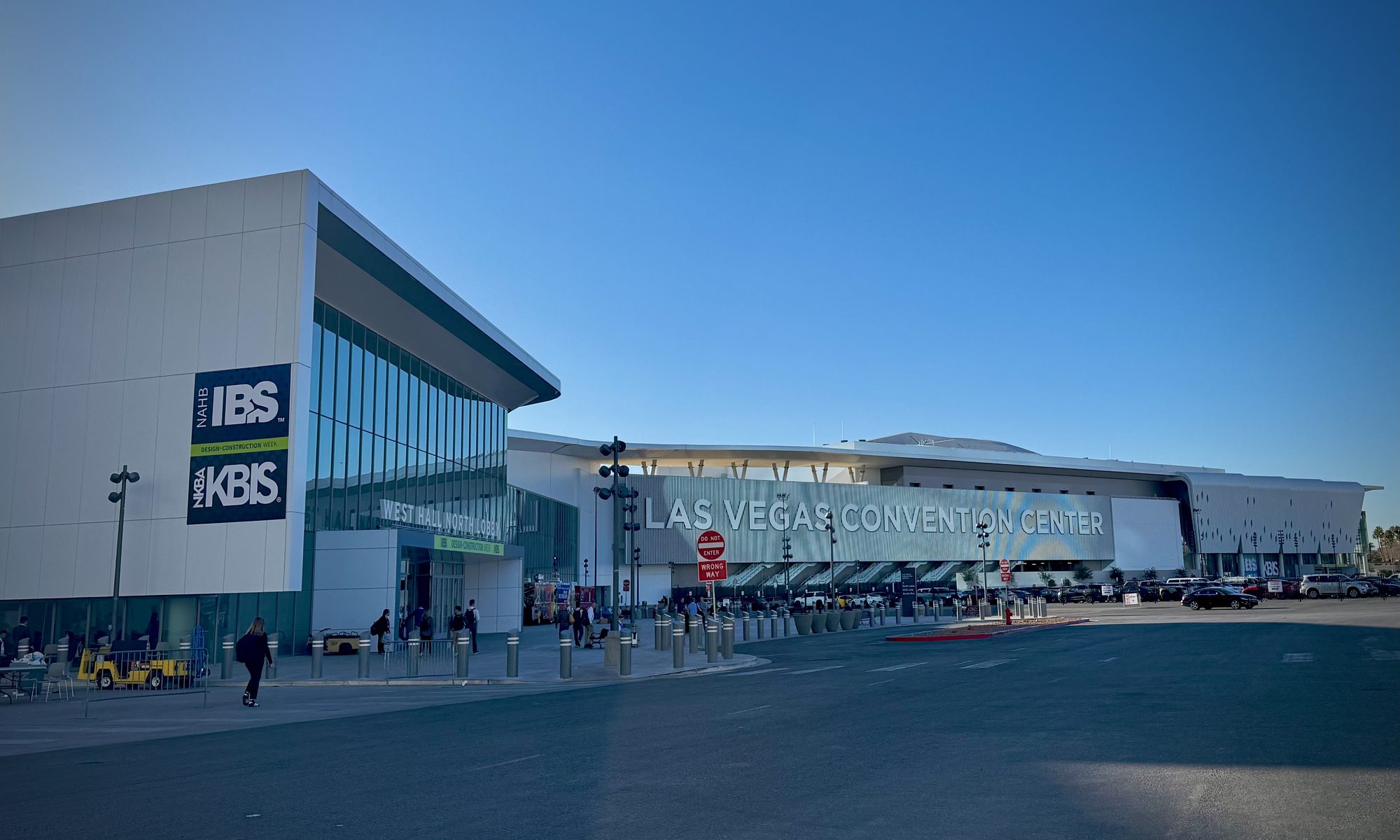
The 2025 NAHB International Builders' Show is useful for the same reason it is exhausting. It compresses most of the residential construction industry into a few halls of the Las Vegas Convention Center and asks you to form opinions quickly. Windows, doors, siding, HVAC, EV charging, smart panels, appliances, estimating software, project management platforms, and a growing wall of AI tools all competed for the same attention, with an education program running in parallel. NAHB counted more than 81,000 builders, remodelers, and developers at the 2025 show, its largest turnout in seventeen years.1
A show that size is worth reading as a forecast. It shows where the industry wants to go, and how much of the business is now shaped by things that never used to touch the jobsite: software, electrification, energy code, documentation, and the steady claim that the right tool will finally make construction predictable. Some of that is real. Most of it is provisional. The only question worth carrying through the aisles is whether a product survives contact with an actual house. That is the test that matters, and it is the one a trade show is least equipped to administer.
AI Had the Crowd
AI drew the largest crowds, and the reason is not mysterious. The tools that gathered people promised to estimate faster, manage projects more closely, organize the paperwork, and turn messy field inputs into clean decisions. Residential construction has a documentation problem, a coordination problem, an estimating problem, and a memory problem, often on the same project, so the pitch lands. Every renovation generates more information than a small team can hold in its head: photos, measurements, bids, change decisions, inspection notes, finish selections, invoices, and the running list of things someone noticed once and never wrote down. When that information scatters, the work slows and the risk climbs.
AI genuinely helps there. It can summarize site notes, compare estimates, keep photos in order, draft a scope, and track which decisions are still open. What it cannot do is supply the judgment that makes any of those outputs worth having. A vague scope run through a good model comes back as a well-formatted vague scope. A weak estimate comes back more confident and no more correct. The software organizes the work; it does not walk the crawlspace, read the framing, know the neighborhood's price ceiling, or weigh whether a layout change is worth the plumbing and inspection sequence it sets off. In the hands of someone who already knows those things, AI is leverage. As a substitute for knowing them, it mostly produces faster mistakes.
The Real Test Is Uncertainty
Away from the AI booths, the products that held up best shared a quieter quality: they reduced uncertainty. In renovation, uncertainty is where the money goes. The wall opens and the framing is worse than the listing implied. The panel has less capacity than the plan assumed. The drainage problem turns out to be older than the last three owners. A window detail that read as trivial becomes a water-management problem by the first winter. Anything that narrows the range of what can go wrong is worth more than anything that simply looks current.
That standard sorts the floor fast. A window or door system earns attention if it installs predictably and manages water at the details, not because of the showroom finish. A siding product matters if its assembly performs in real weather and its details are legible to the crew. A management app matters if it preserves decisions and closes the gaps where communication usually fails. A smart panel matters if it lets a house absorb modern electrical demand without turning every circuit into a guess. None of that photographs especially well, which is the point. The industry does not need novelty. It needs fewer surprises after demolition, and looking modern is a different thing entirely, easy to confuse with the real thing on a trade show floor.
Electrification Became a Planning Problem
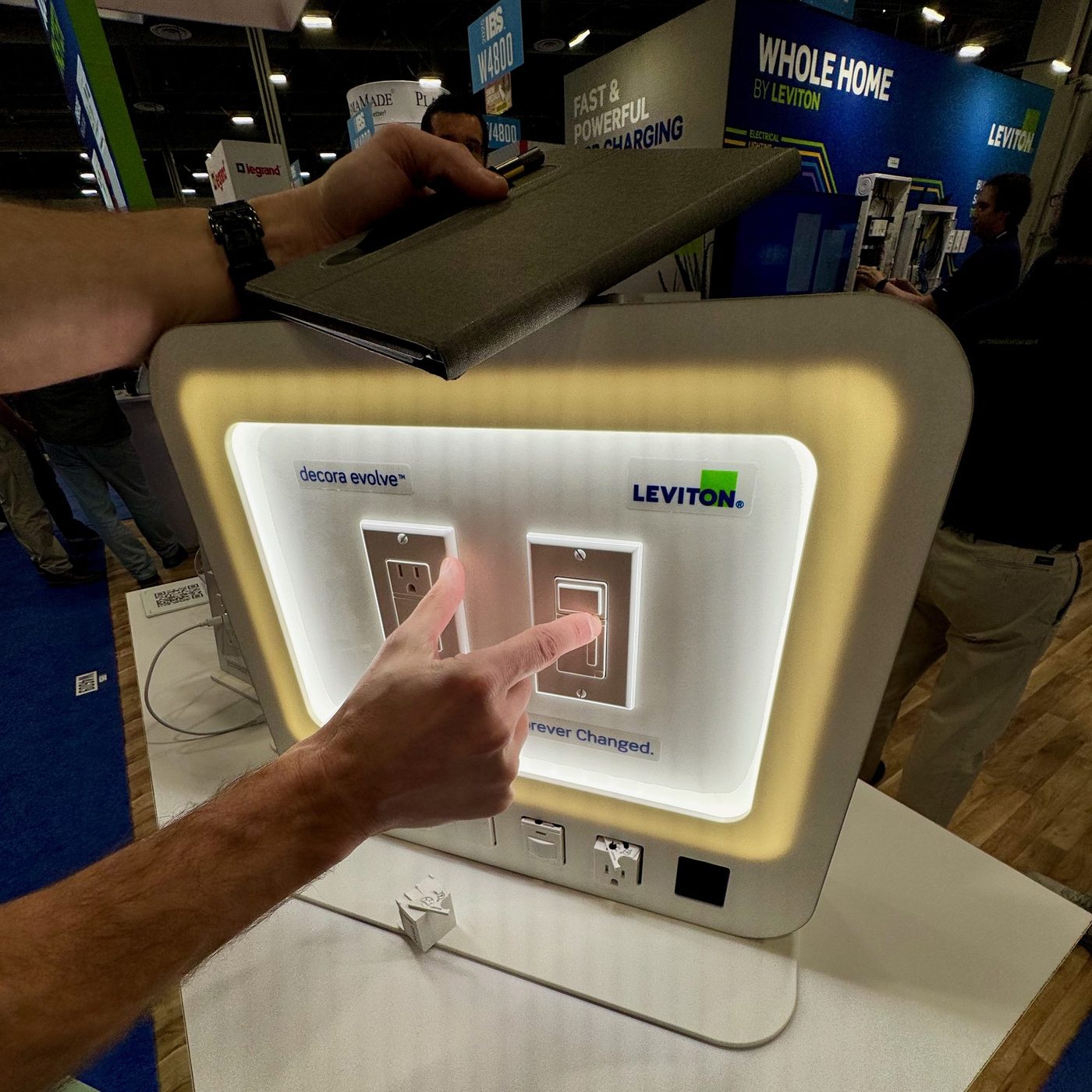
The electrical hall was the most relevant part of the show, because electrification has quietly moved from a finish-level choice to a planning constraint. EV charging, heat pump HVAC, heat pump water heaters, induction cooking, solar readiness, smart panels, and heat pump dryers all change a home's service capacity, panel location, and mechanical layout, which means they have to be decided early or they distort everything downstream.
The code is moving the same way. California's 2025 Building Energy Efficiency Standards expand heat pump use in new residential construction, push electric-readiness, and tighten ventilation requirements for projects whose permits are filed on or after January 1, 2026.2 Renovation is not new construction, but the trajectory is unambiguous: houses are being asked to carry more efficient equipment and more electrical load. Heat pump dryers are a small, concrete case of how this cuts both ways. ENERGY STAR puts their energy use at roughly 70 percent below a conventional vented dryer, which is a real gain.3 It is also not free of tradeoffs, since the longer cycle times can matter more to a tenant than the savings do. Smart panels and EV charging behave the same way. They are not upgrades in the abstract; they are good when they answer a constraint the specific house actually has.
For older Bay Area homes, the practical consequence is that electrical planning belongs near the front of the project, not at appliance selection. The service size, panel, circuits, laundry location, HVAC strategy, and likely buyer or tenant all shape the decision, and reaching them late is how a clean renovation acquires an expensive surprise.
The Education Ran About 70/30
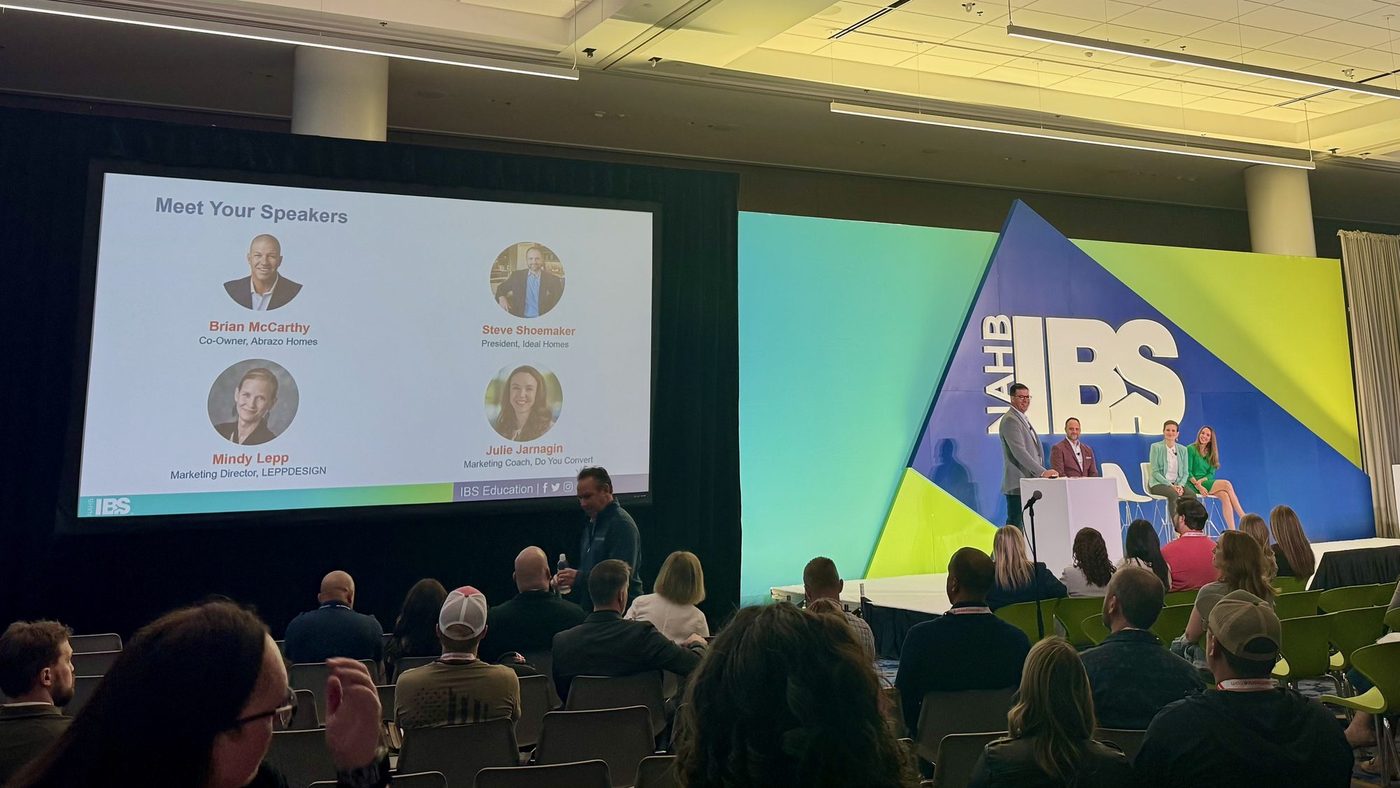
The education program was roughly 70 percent useful and 30 percent uneven, which for a show this size is a good ratio. The best sessions were genuinely excellent, grounded in experience and specific about how working builders are thinking through labor, estimating, process, and risk. The weaker ones had a familiar quality: speakers fluent in the language of innovation who had not carried the underlying problem in the field.
That gap is worth naming, because construction has always rewarded confident explanation from people who are not holding the risk. A slide can make any process look orderly; the project rarely cooperates. The speakers worth the seat understood that the work is sequence, labor, documentation, and the cost of being wrong, and that no tool removes those. Their argument was not that technology makes building easy. It was that the business is getting more complex (codes, energy systems, buyer expectations, and carrying costs all moving at once) and that a small operator therefore needs better systems while staying disciplined about which tools are worth adopting. That is a harder and more honest message than the one being sold a hundred feet away on the show floor.
The House Still Decides
Bay Area renovation is an unusually strict test for any of this. The houses are old, often layered with decades of prior work. Lots slope, access is tight, drainage is complicated, labor is expensive, and neighborhood price ceilings are real, so small mistakes compound quickly. That does not make construction technology less important here. It raises the bar the technology has to clear. A product that performs in a new subdivision may have nothing to say to a 1920s house with odd additions, undersized framing, and water moving the wrong way across the lot, and a software workflow built for ideal conditions tends not to survive the week after demolition.
So the question we bring back from a show like IBS is narrow on purpose. Not whether a tool is interesting, but whether it helps make a better decision on a real house: less uncertainty, cleaner documentation, clearer sequence, a more durable result, a better outcome for the buyer or tenant, a protected budget, a shorter path from current condition to finished product. A trade show is good at the promise and structurally bad at the limitation, because everything on the floor is demonstrated under conditions the jobsite never offers. The convention center can introduce the tool. Only the house can tell you whether it was worth using.
Sources
-
National Association of Home Builders, "2025 International Builders' Show Boasts Record Attendance, Highlights Industry Innovation." https://www.nahb.org/news-and-economics/press-releases/2025/02/2025-ibs-boasts-record-attendance-highlights-industry-innovation ↩
-
California Energy Commission, "2025 Building Energy Efficiency Standards." https://www.energy.ca.gov/programs-and-topics/programs/building-energy-efficiency-standards/2025-building-energy-efficiency ↩
-
ENERGY STAR, "Clothes Dryers." https://www.energystar.gov/products/clothes_dryers ↩